

Mother's Day is coming. And if you have someone in your life who is dreading it - maybe they've lost their mum, or they're grieving a child, or motherhood is complicated - this is for you.
You want to help. You just don't know how. And you're scared of saying the wrong thing, so sometimes you end up saying nothing at all.
Here's what you actually need to know.
You don't have to fix it. (You can't.)
The instinct to make things better is a loving instinct. But grief isn't a problem to be solved. There is no sentence you can say that will take the pain away - and the pressure to find it can make you pull back entirely.
What your person actually needs isn't the perfect words. It's you. Showing up. Acknowledging that this day is hard for them. That's it.
Reach out before the day, not after
A lot of people check in after a difficult date - after Christmas, after a birthday, after Mother's Day. But the build-up is often the hardest part.
A simple message the week before: "I'm thinking of you ahead of Sunday. No pressure to reply, I just wanted you to know I'm here" - that can mean the world. It says: I remembered. I thought about you. You're not invisible.
Ask what they need, then actually do it
"Let me know if you need anything" is kind. But it puts the labour on them - to identify a need, articulate it, and ask for help, which is really hard when you're grieving.
Try something more specific instead. "I'm going to drop some food round on Sunday - is there something you'd love?" Or: "Do you want to come over and just watch films and not talk about it?" Or even: "I'm free Sunday morning if you want company."
Specific offers are so much easier to say yes to.
Don't avoid mentioning the person they've lost
People worry that bringing up a name will make someone sad. But they're already sad. What they're scared of is being the only one who remembers.
"I was thinking about your mum today" is not going to break someone. It's going to remind them that their person mattered. That someone else is still carrying them too.
Say the name. It's almost always the right call.
Give them permission to feel however they feel
Grief isn't always tears. Sometimes it's rage. Sometimes it's dark humour. Sometimes it's wanting to watch trash TV and eat crisps and not talk about feelings at all.
Follow their lead. If they want to laugh about it, laugh with them. If they want to cry, sit with them. If they want to be distracted, provide distraction without guilt.
You're not responsible for managing their grief for them. You're just there. That's the whole job.
Look after yourself too
Supporting someone through grief is an act of love, and it takes something out of you. It's ok to find it hard. It's ok to not know what to say. It's ok to get it a bit wrong sometimes and try again.
You're not going to be perfect at this. Nobody is. What counts is that you showed up.
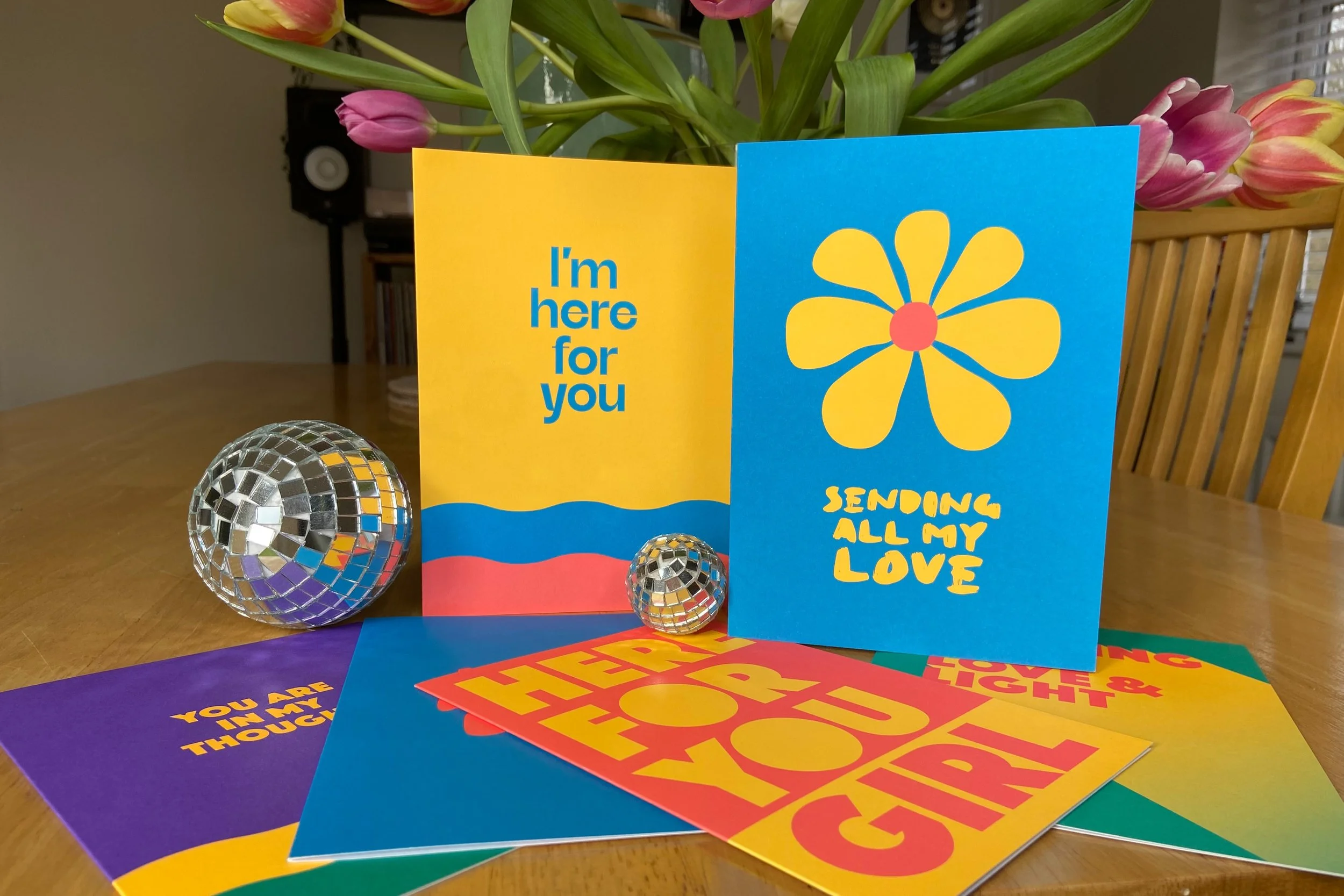
If you're looking for a card that won't feel tone-deaf to send to someone navigating this, we've got you. LoveLossDiscoballs makes cards for the complicated stuff - grief, loss, the days that are harder than they're supposed to be. Because sometimes the right card is the one that says: I see you, and I'm not looking away.


